logoMenu

Tom Twiby®

Contact Me

Resume.pdf
Linkedin

Building the System

The design system was built as a living toolkit of patterns and elements, structured using atomic design principles and delivered sprint by sprint. We designed hundreds of components, brought together through user stories covering real scenarios: new phone orders, payment troubleshooting, loyalty programs, and retail experiences. This grounded every component in practical use rather than abstract documentation.

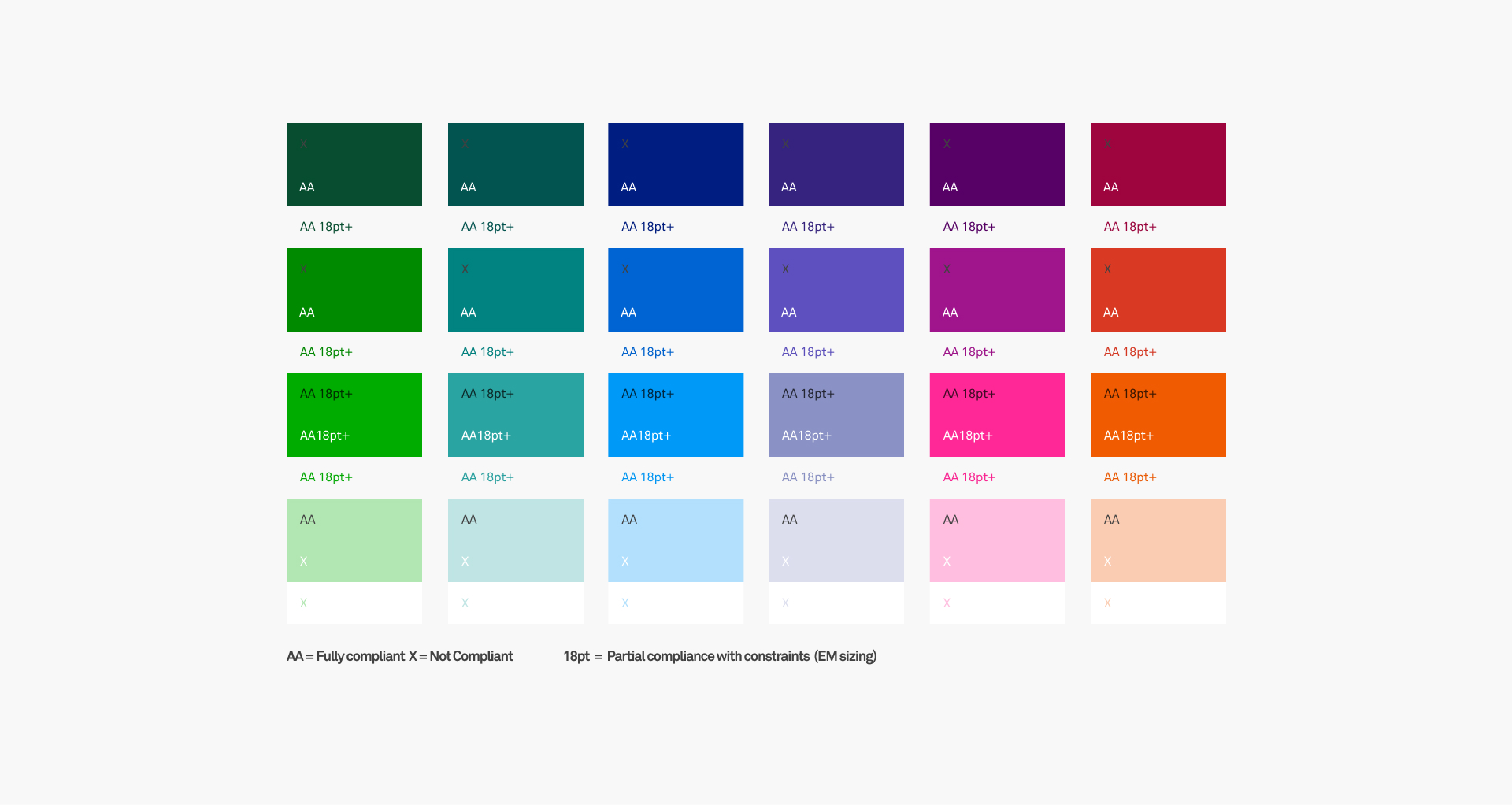
Accessibility was built in from the start. We defined inclusion guidelines to ensure Telstra met its commitment to AA WCAG compliance across its entire digital environment, shaping decisions at every level from colour contrast and typography to interaction patterns and component behaviour.


Motion Guidelines

Building on the design system, I contributed to motion guidelines that extended "Light in Motion" into movement. Three guiding principles: delight users by turning standard interactions into memorable moments, educate by providing context without requiring additional clicks, and focus by drawing attention to key data or UI elements.

We established rules for timing, easing, and transformation types to keep all micro-interactions and transitions consistent. These guidelines scaled beyond the digital product into retail, advertising, and social content, giving Telstra a cohesive motion language across every channel.

Finding the Foundation

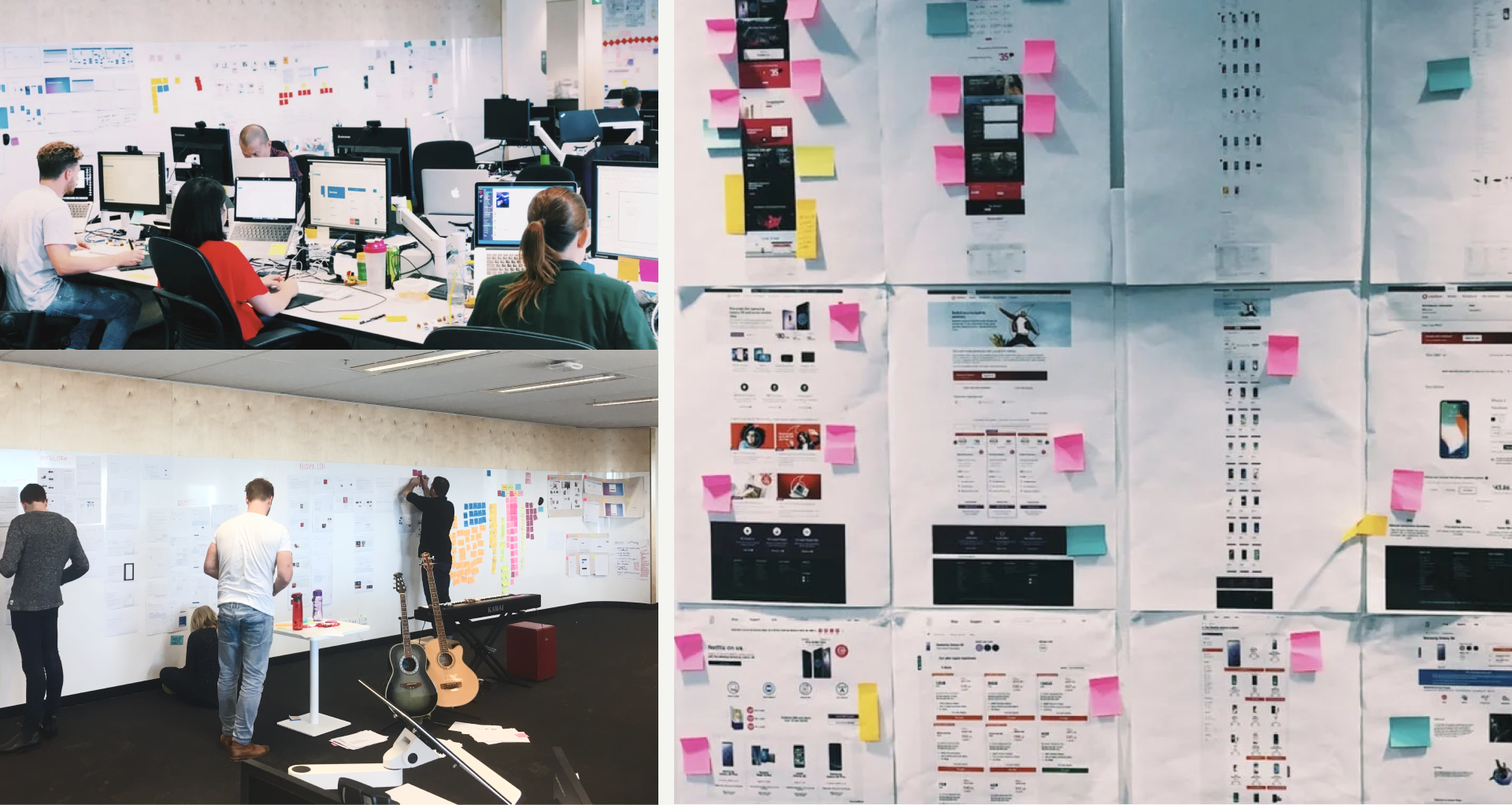
We started with a UX audit across customer journeys and ran workshops to uncover interaction inconsistencies and align on priorities. The existing brand had strong equity, but it hadn't been translated into digital in a coherent way. We needed to honour what Telstra already had while pushing it forward into a system that could scale.


A key early insight was that the system couldn't just be a component library. It needed a unifying creative idea that gave every design decision a reason, something teams across the business could rally around.

The Challenge

Telstra had over 20 digital products, but only a handful had any documented style guides. Those that existed were inconsistent, manually maintained, and scattered across static websites, PDFs, and wikis. Teams were designing in isolation, leading to duplicated effort, fragmented branding, and an experience that didn't feel connected across web and native apps.


There was no centralised design system, accessibility wasn't enforced, and multiple brand expressions were in play at once.


We were brought in as a small R/GA team of six, embedded within Telstra's Sydney office for an eight-month engagement, to audit the entire business and build a design system that could unify thousands of consumer touchpoints.

My Role

UI Designer at R/GA, embedded within Telstra. I worked across the design direction, component and system architecture, motion guidelines, and accessibility standards, collaborating closely with Telstra's internal designers, product owners, and stakeholders.

Light in Motion

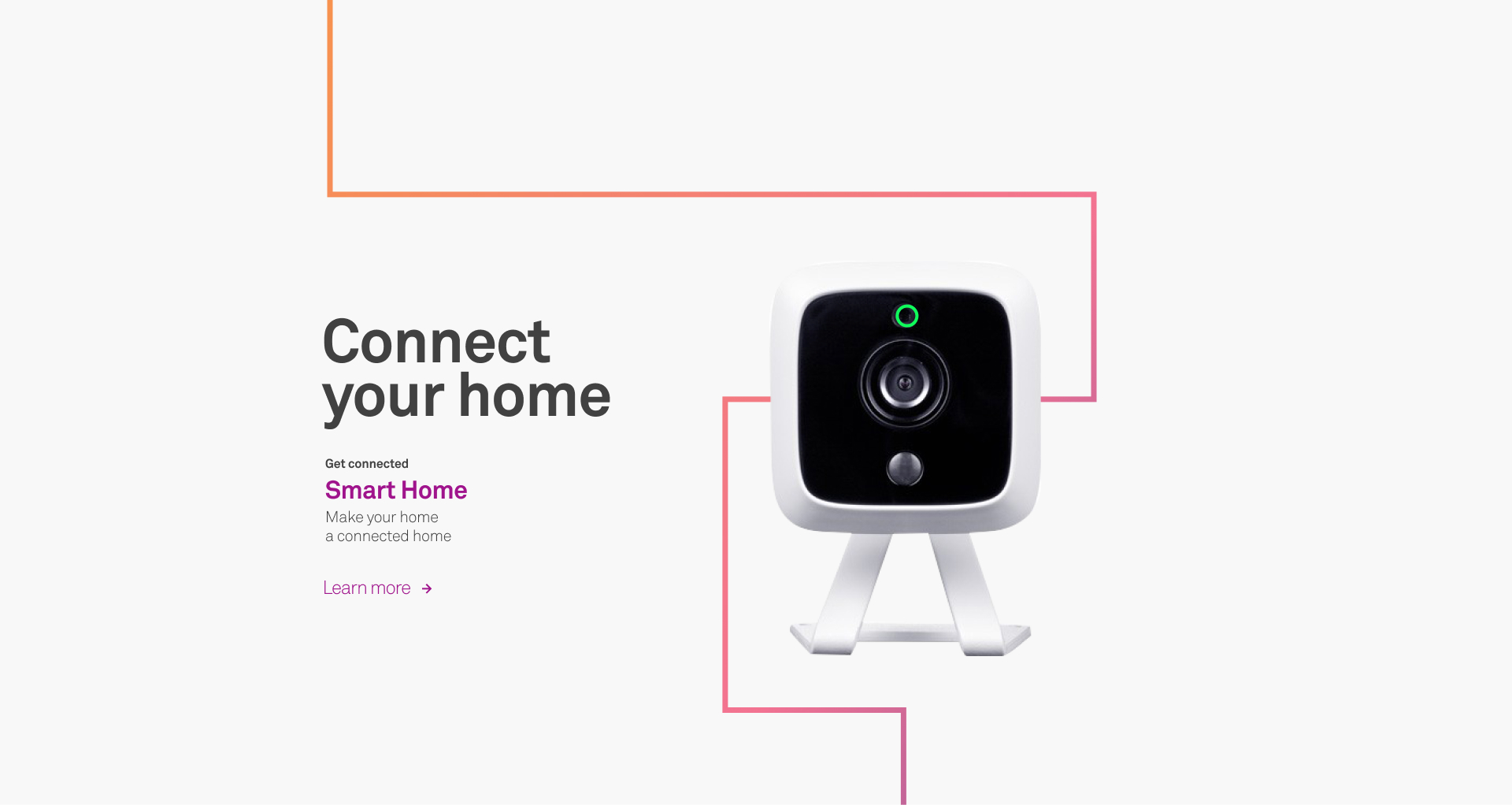
We developed a visual concept called "Light in Motion," drawing on the luminosity, vibrancy, and colour of the Telstra brand. The idea was to use light as a functional design element, bringing the brand's gradients and palette to life through motion and interaction rather than treating them as decoration.


This gave us a distinctive creative framework. It honoured the existing brand heritage while pushing it into new territory, and it scaled naturally across digital and physical touchpoints. We introduced the T-Line, a device that used Telstra's colours and gradients as a functional, animated element to guide users through the experience.

Telstra Design System

A unified design language for Australia's largest telecommunications brand.
Outcome

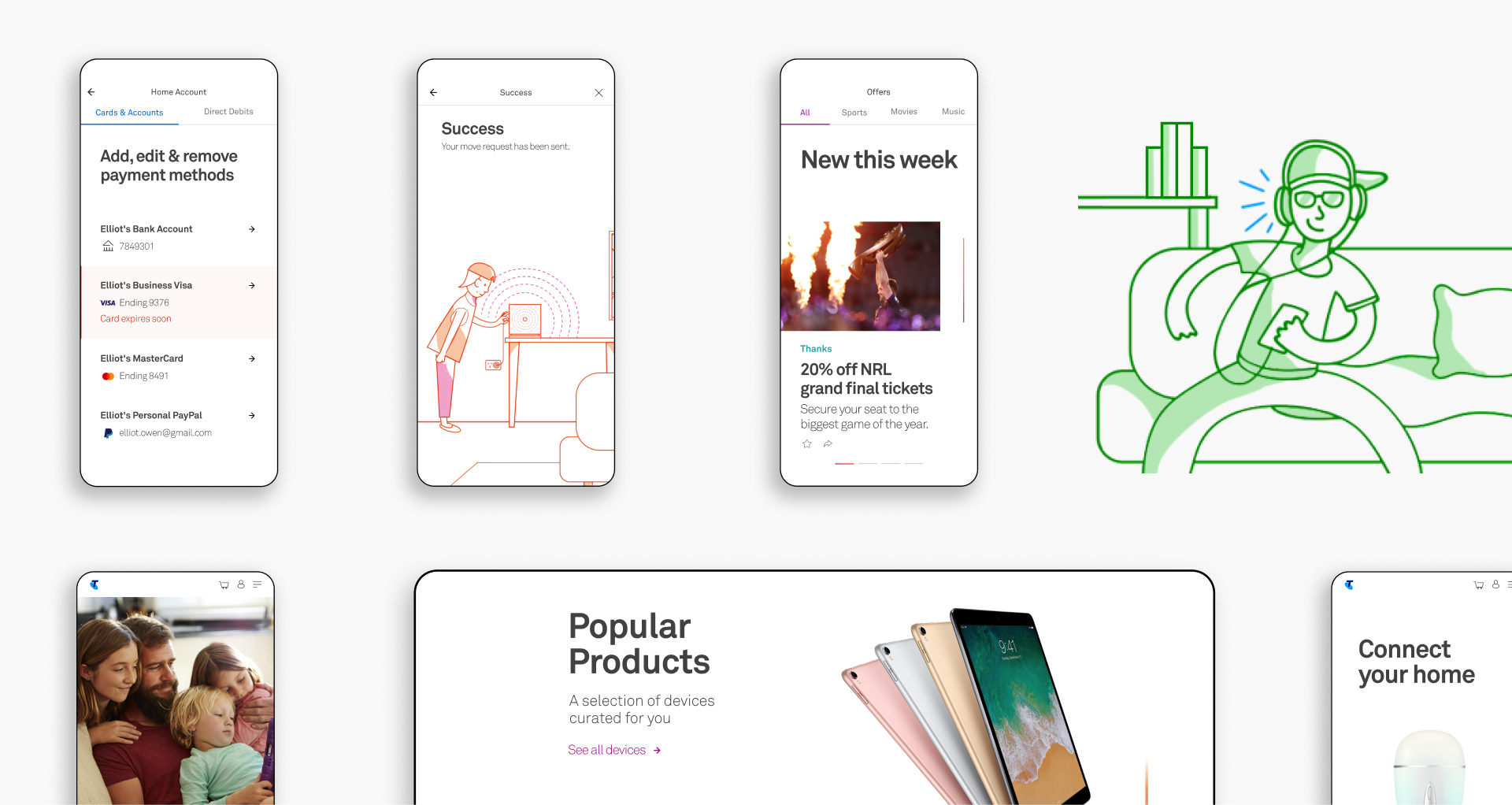
We replaced Telstra's fragmented patchwork of style guides with a unified, scalable, living design system. It gave Telstra's design community a shared language and set of standards, enabling teams to ship faster with consistent, accessible, on-brand UI across web and native apps. The system supported common flows like plan comparison, device selection, and purchase, and the motion language established a quality bar for the brand going forward.

logoMenu

Tom Twiby®

Contact Me

Resume.pdf

Linkedin

Building the System

The design system was built as a living toolkit of patterns and elements, structured using atomic design principles and delivered sprint by sprint. We designed hundreds of components, brought together through user stories covering real scenarios: new phone orders, payment troubleshooting, loyalty programs, and retail experiences. This grounded every component in practical use rather than abstract documentation.

Accessibility was built in from the start. We defined inclusion guidelines to ensure Telstra met its commitment to AA WCAG compliance across its entire digital environment, shaping decisions at every level from colour contrast and typography to interaction patterns and component behaviour.


Motion Guidelines

Building on the design system, I contributed to motion guidelines that extended "Light in Motion" into movement. Three guiding principles: delight users by turning standard interactions into memorable moments, educate by providing context without requiring additional clicks, and focus by drawing attention to key data or UI elements.

We established rules for timing, easing, and transformation types to keep all micro-interactions and transitions consistent. These guidelines scaled beyond the digital product into retail, advertising, and social content, giving Telstra a cohesive motion language across every channel.

Finding the Foundation

We started with a UX audit across customer journeys and ran workshops to uncover interaction inconsistencies and align on priorities. The existing brand had strong equity, but it hadn't been translated into digital in a coherent way. We needed to honour what Telstra already had while pushing it forward into a system that could scale.


A key early insight was that the system couldn't just be a component library. It needed a unifying creative idea that gave every design decision a reason, something teams across the business could rally around.

The Challenge

Telstra had over 20 digital products, but only a handful had any documented style guides. Those that existed were inconsistent, manually maintained, and scattered across static websites, PDFs, and wikis. Teams were designing in isolation, leading to duplicated effort, fragmented branding, and an experience that didn't feel connected across web and native apps.


There was no centralised design system, accessibility wasn't enforced, and multiple brand expressions were in play at once.


We were brought in as a small R/GA team of six, embedded within Telstra's Sydney office for an eight-month engagement, to audit the entire business and build a design system that could unify thousands of consumer touchpoints.

My Role

UI Designer at R/GA, embedded within Telstra. I worked across the design direction, component and system architecture, motion guidelines, and accessibility standards, collaborating closely with Telstra's internal designers, product owners, and stakeholders.

Light in Motion

We developed a visual concept called "Light in Motion," drawing on the luminosity, vibrancy, and colour of the Telstra brand. The idea was to use light as a functional design element, bringing the brand's gradients and palette to life through motion and interaction rather than treating them as decoration.


This gave us a distinctive creative framework. It honoured the existing brand heritage while pushing it into new territory, and it scaled naturally across digital and physical touchpoints. We introduced the T-Line, a device that used Telstra's colours and gradients as a functional, animated element to guide users through the experience.

Telstra Design System

A unified design language for Australia's largest telecommunications brand.
Outcome

We replaced Telstra's fragmented patchwork of style guides with a unified, scalable, living design system. It gave Telstra's design community a shared language and set of standards, enabling teams to ship faster with consistent, accessible, on-brand UI across web and native apps. The system supported common flows like plan comparison, device selection, and purchase, and the motion language established a quality bar for the brand going forward.

Logo

Projects

Projects

My AI Approach

Projects

Kitchen

Projects

Resume.pdf

Projects

Tom Twiby®

Contact Me

Resume.pdf

Linkedin

Building the System

The design system was built as a living toolkit of patterns and elements, structured using atomic design principles and delivered sprint by sprint. We designed hundreds of components, brought together through user stories covering real scenarios: new phone orders, payment troubleshooting, loyalty programs, and retail experiences. This grounded every component in practical use rather than abstract documentation.

Accessibility was built in from the start. We defined inclusion guidelines to ensure Telstra met its commitment to AA WCAG compliance across its entire digital environment, shaping decisions at every level from colour contrast and typography to interaction patterns and component behaviour.


Motion Guidelines

Building on the design system, I contributed to motion guidelines that extended "Light in Motion" into movement. Three guiding principles: delight users by turning standard interactions into memorable moments, educate by providing context without requiring additional clicks, and focus by drawing attention to key data or UI elements.

We established rules for timing, easing, and transformation types to keep all micro-interactions and transitions consistent. These guidelines scaled beyond the digital product into retail, advertising, and social content, giving Telstra a cohesive motion language across every channel.

Finding the Foundation

We started with a UX audit across customer journeys and ran workshops to uncover interaction inconsistencies and align on priorities. The existing brand had strong equity, but it hadn't been translated into digital in a coherent way. We needed to honour what Telstra already had while pushing it forward into a system that could scale.


A key early insight was that the system couldn't just be a component library. It needed a unifying creative idea that gave every design decision a reason, something teams across the business could rally around.

The Challenge

Telstra had over 20 digital products, but only a handful had any documented style guides. Those that existed were inconsistent, manually maintained, and scattered across static websites, PDFs, and wikis. Teams were designing in isolation, leading to duplicated effort, fragmented branding, and an experience that didn't feel connected across web and native apps.


There was no centralised design system, accessibility wasn't enforced, and multiple brand expressions were in play at once.


We were brought in as a small R/GA team of six, embedded within Telstra's Sydney office for an eight-month engagement, to audit the entire business and build a design system that could unify thousands of consumer touchpoints.

My Role

UI Designer at R/GA, embedded within Telstra. I worked across the design direction, component and system architecture, motion guidelines, and accessibility standards, collaborating closely with Telstra's internal designers, product owners, and stakeholders.

Light in Motion

We developed a visual concept called "Light in Motion," drawing on the luminosity, vibrancy, and colour of the Telstra brand. The idea was to use light as a functional design element, bringing the brand's gradients and palette to life through motion and interaction rather than treating them as decoration.


This gave us a distinctive creative framework. It honoured the existing brand heritage while pushing it into new territory, and it scaled naturally across digital and physical touchpoints. We introduced the T-Line, a device that used Telstra's colours and gradients as a functional, animated element to guide users through the experience.

Telstra Design System

A unified design language for Australia's largest telecommunications brand.
Outcome

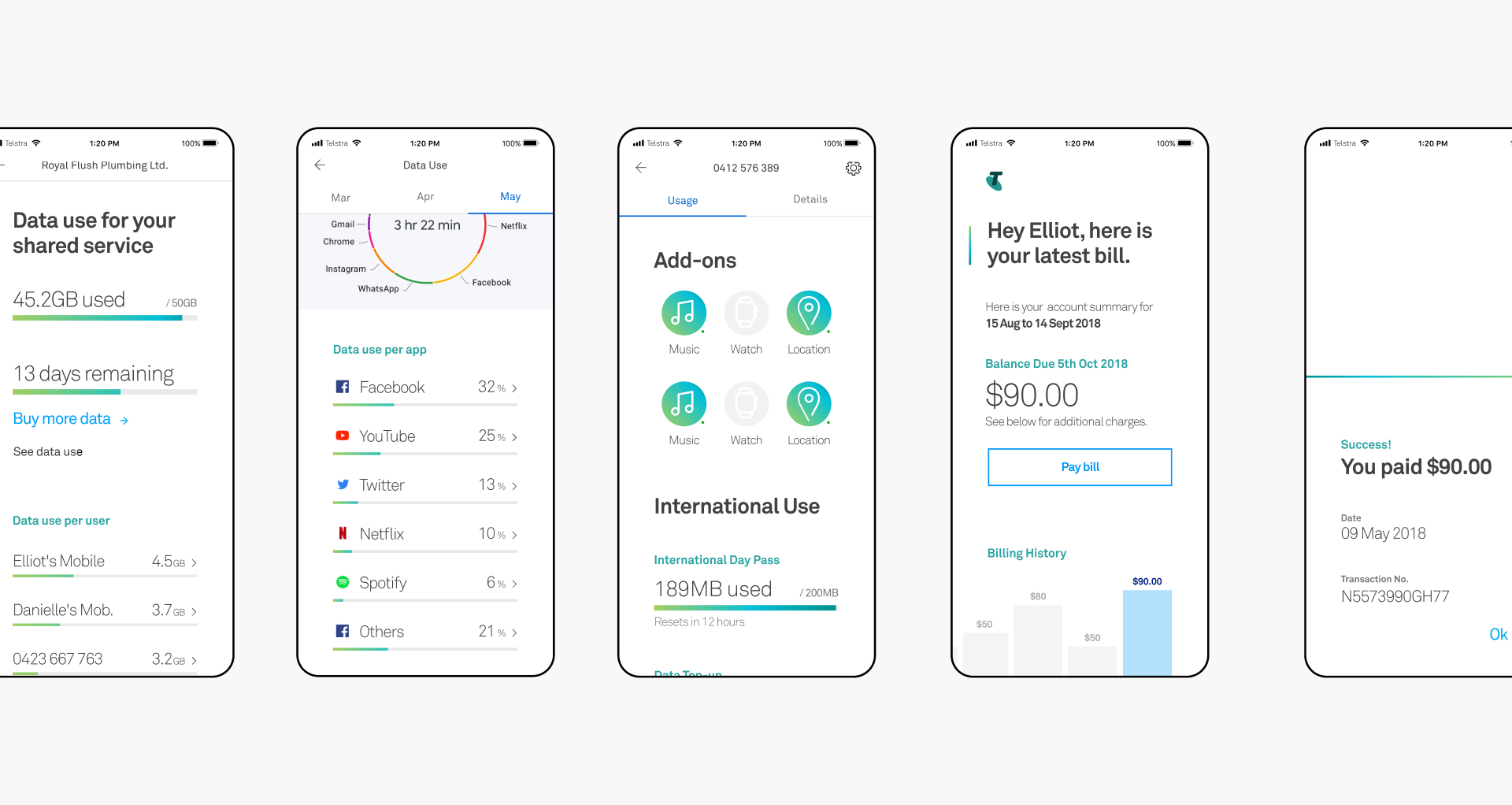
We replaced Telstra's fragmented patchwork of style guides with a unified, scalable, living design system. It gave Telstra's design community a shared language and set of standards, enabling teams to ship faster with consistent, accessible, on-brand UI across web and native apps. The system supported common flows like plan comparison, device selection, and purchase, and the motion language established a quality bar for the brand going forward.

Logo

Projects

Projects

My AI Approach

Projects

Kitchen

Projects

Resume.pdf

Projects

Tom Twiby®

Contact Me

Resume.pdf

Linkedin

Building the System

The design system was built as a living toolkit of patterns and elements, structured using atomic design principles and delivered sprint by sprint. We designed hundreds of components, brought together through user stories covering real scenarios: new phone orders, payment troubleshooting, loyalty programs, and retail experiences. This grounded every component in practical use rather than abstract documentation.

Accessibility was built in from the start. We defined inclusion guidelines to ensure Telstra met its commitment to AA WCAG compliance across its entire digital environment, shaping decisions at every level from colour contrast and typography to interaction patterns and component behaviour.


Motion Guidelines

Building on the design system, I contributed to motion guidelines that extended "Light in Motion" into movement. Three guiding principles: delight users by turning standard interactions into memorable moments, educate by providing context without requiring additional clicks, and focus by drawing attention to key data or UI elements.

We established rules for timing, easing, and transformation types to keep all micro-interactions and transitions consistent. These guidelines scaled beyond the digital product into retail, advertising, and social content, giving Telstra a cohesive motion language across every channel.

Finding the Foundation

We started with a UX audit across customer journeys and ran workshops to uncover interaction inconsistencies and align on priorities. The existing brand had strong equity, but it hadn't been translated into digital in a coherent way. We needed to honour what Telstra already had while pushing it forward into a system that could scale.


A key early insight was that the system couldn't just be a component library. It needed a unifying creative idea that gave every design decision a reason, something teams across the business could rally around.

The Challenge

Telstra had over 20 digital products, but only a handful had any documented style guides. Those that existed were inconsistent, manually maintained, and scattered across static websites, PDFs, and wikis. Teams were designing in isolation, leading to duplicated effort, fragmented branding, and an experience that didn't feel connected across web and native apps.


There was no centralised design system, accessibility wasn't enforced, and multiple brand expressions were in play at once.


We were brought in as a small R/GA team of six, embedded within Telstra's Sydney office for an eight-month engagement, to audit the entire business and build a design system that could unify thousands of consumer touchpoints.

My Role

UI Designer at R/GA, embedded within Telstra. I worked across the design direction, component and system architecture, motion guidelines, and accessibility standards, collaborating closely with Telstra's internal designers, product owners, and stakeholders.

Light in Motion

We developed a visual concept called "Light in Motion," drawing on the luminosity, vibrancy, and colour of the Telstra brand. The idea was to use light as a functional design element, bringing the brand's gradients and palette to life through motion and interaction rather than treating them as decoration.


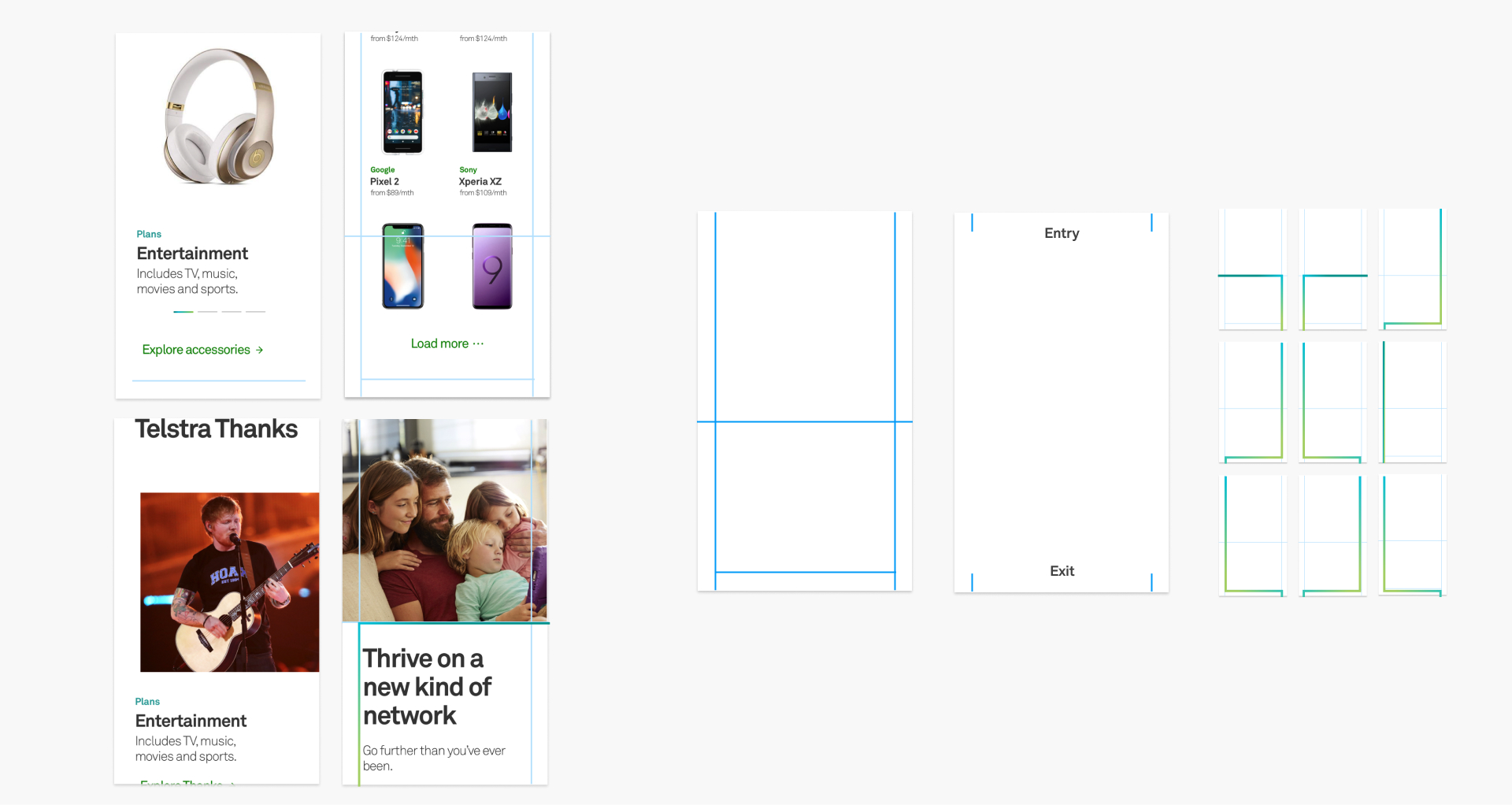
This gave us a distinctive creative framework. It honoured the existing brand heritage while pushing it into new territory, and it scaled naturally across digital and physical touchpoints. We introduced the T-Line, a device that used Telstra's colours and gradients as a functional, animated element to guide users through the experience.

Telstra Design System

A unified design language for Australia's largest telecommunications brand.
Outcome

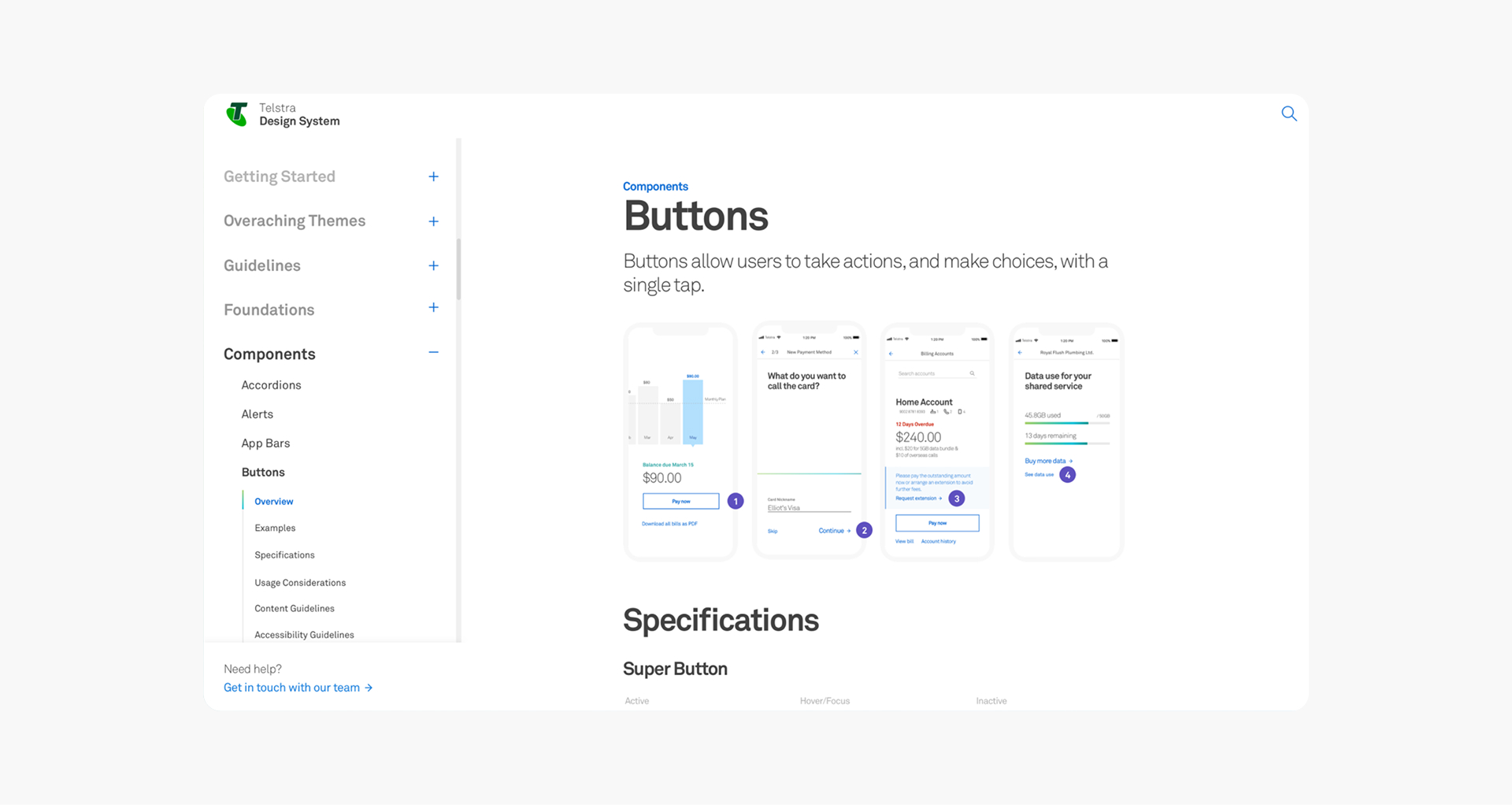
We replaced Telstra's fragmented patchwork of style guides with a unified, scalable, living design system. It gave Telstra's design community a shared language and set of standards, enabling teams to ship faster with consistent, accessible, on-brand UI across web and native apps. The system supported common flows like plan comparison, device selection, and purchase, and the motion language established a quality bar for the brand going forward.
Logo

Projects

Projects

My AI Approach

Projects

Kitchen

Projects

Resume.pdf

Projects

Tom Twiby®

Contact Me

LinkedIn

Resume.pdf

Building the System

The design system was built as a living toolkit of patterns and elements, structured using atomic design principles and delivered sprint by sprint. We designed hundreds of components, brought together through user stories covering real scenarios: new phone orders, payment troubleshooting, loyalty programs, and retail experiences. This grounded every component in practical use rather than abstract documentation.

Accessibility was built in from the start. We defined inclusion guidelines to ensure Telstra met its commitment to AA WCAG compliance across its entire digital environment, shaping decisions at every level from colour contrast and typography to interaction patterns and component behaviour.


Motion Guidelines

Building on the design system, I contributed to motion guidelines that extended "Light in Motion" into movement. Three guiding principles: delight users by turning standard interactions into memorable moments, educate by providing context without requiring additional clicks, and focus by drawing attention to key data or UI elements.

We established rules for timing, easing, and transformation types to keep all micro-interactions and transitions consistent. These guidelines scaled beyond the digital product into retail, advertising, and social content, giving Telstra a cohesive motion language across every channel.

Light in Motion

We developed a visual concept called "Light in Motion," drawing on the luminosity, vibrancy, and colour of the Telstra brand. The idea was to use light as a functional design element, bringing the brand's gradients and palette to life through motion and interaction rather than treating them as decoration.


This gave us a distinctive creative framework. It honoured the existing brand heritage while pushing it into new territory, and it scaled naturally across digital and physical touchpoints. We introduced the T-Line, a device that used Telstra's colours and gradients as a functional, animated element to guide users through the experience.

Finding the Foundation

We started with a UX audit across customer journeys and ran workshops to uncover interaction inconsistencies and align on priorities. The existing brand had strong equity, but it hadn't been translated into digital in a coherent way. We needed to honour what Telstra already had while pushing it forward into a system that could scale.


A key early insight was that the system couldn't just be a component library. It needed a unifying creative idea that gave every design decision a reason, something teams across the business could rally around.

The Challenge

Telstra had over 20 digital products, but only a handful had any documented style guides. Those that existed were inconsistent, manually maintained, and scattered across static websites, PDFs, and wikis. Teams were designing in isolation, leading to duplicated effort, fragmented branding, and an experience that didn't feel connected across web and native apps.


There was no centralised design system, accessibility wasn't enforced, and multiple brand expressions were in play at once.


We were brought in as a small R/GA team of six, embedded within Telstra's Sydney office for an eight-month engagement, to audit the entire business and build a design system that could unify thousands of consumer touchpoints.

My Role

UI Designer at R/GA, embedded within Telstra. I worked across the design direction, component and system architecture, motion guidelines, and accessibility standards, collaborating closely with Telstra's internal designers, product owners, and stakeholders.

Telstra Design System

A unified design language for Australia's largest telecommunications brand.

Outcome

We replaced Telstra's fragmented patchwork of style guides with a unified, scalable, living design system. It gave Telstra's design community a shared language and set of standards, enabling teams to ship faster with consistent, accessible, on-brand UI across web and native apps. The system supported common flows like plan comparison, device selection, and purchase, and the motion language established a quality bar for the brand going forward.

Logo

Projects

Projects

My AI Approach

Projects

Kitchen

Projects

Resume.pdf

Projects

Tom Twiby®

Contact Me

LinkedIn

Resume.pdf

Building the System

The design system was built as a living toolkit of patterns and elements, structured using atomic design principles and delivered sprint by sprint. We designed hundreds of components, brought together through user stories covering real scenarios: new phone orders, payment troubleshooting, loyalty programs, and retail experiences. This grounded every component in practical use rather than abstract documentation.

Accessibility was built in from the start. We defined inclusion guidelines to ensure Telstra met its commitment to AA WCAG compliance across its entire digital environment, shaping decisions at every level from colour contrast and typography to interaction patterns and component behaviour.


Motion Guidelines

Building on the design system, I contributed to motion guidelines that extended "Light in Motion" into movement. Three guiding principles: delight users by turning standard interactions into memorable moments, educate by providing context without requiring additional clicks, and focus by drawing attention to key data or UI elements.

We established rules for timing, easing, and transformation types to keep all micro-interactions and transitions consistent. These guidelines scaled beyond the digital product into retail, advertising, and social content, giving Telstra a cohesive motion language across every channel.

Light in Motion

We developed a visual concept called "Light in Motion," drawing on the luminosity, vibrancy, and colour of the Telstra brand. The idea was to use light as a functional design element, bringing the brand's gradients and palette to life through motion and interaction rather than treating them as decoration.


This gave us a distinctive creative framework. It honoured the existing brand heritage while pushing it into new territory, and it scaled naturally across digital and physical touchpoints. We introduced the T-Line, a device that used Telstra's colours and gradients as a functional, animated element to guide users through the experience.

Finding the Foundation

We started with a UX audit across customer journeys and ran workshops to uncover interaction inconsistencies and align on priorities. The existing brand had strong equity, but it hadn't been translated into digital in a coherent way. We needed to honour what Telstra already had while pushing it forward into a system that could scale.


A key early insight was that the system couldn't just be a component library. It needed a unifying creative idea that gave every design decision a reason, something teams across the business could rally around.

The Challenge

Telstra had over 20 digital products, but only a handful had any documented style guides. Those that existed were inconsistent, manually maintained, and scattered across static websites, PDFs, and wikis. Teams were designing in isolation, leading to duplicated effort, fragmented branding, and an experience that didn't feel connected across web and native apps.


There was no centralised design system, accessibility wasn't enforced, and multiple brand expressions were in play at once.


We were brought in as a small R/GA team of six, embedded within Telstra's Sydney office for an eight-month engagement, to audit the entire business and build a design system that could unify thousands of consumer touchpoints.

My Role

UI Designer at R/GA, embedded within Telstra. I worked across the design direction, component and system architecture, motion guidelines, and accessibility standards, collaborating closely with Telstra's internal designers, product owners, and stakeholders.

Telstra Design System

A unified design language for Australia's largest telecommunications brand.

Outcome

We replaced Telstra's fragmented patchwork of style guides with a unified, scalable, living design system. It gave Telstra's design community a shared language and set of standards, enabling teams to ship faster with consistent, accessible, on-brand UI across web and native apps. The system supported common flows like plan comparison, device selection, and purchase, and the motion language established a quality bar for the brand going forward.

Logo

Projects

Projects

My AI Approach

Projects

Kitchen

Projects

Resume.pdf

Projects

Tom Twiby®

Contact Me

LinkedIn

Resume.pdf

Building the System

The design system was built as a living toolkit of patterns and elements, structured using atomic design principles and delivered sprint by sprint. We designed hundreds of components, brought together through user stories covering real scenarios: new phone orders, payment troubleshooting, loyalty programs, and retail experiences. This grounded every component in practical use rather than abstract documentation.

Accessibility was built in from the start. We defined inclusion guidelines to ensure Telstra met its commitment to AA WCAG compliance across its entire digital environment, shaping decisions at every level from colour contrast and typography to interaction patterns and component behaviour.


Motion Guidelines

Building on the design system, I contributed to motion guidelines that extended "Light in Motion" into movement. Three guiding principles: delight users by turning standard interactions into memorable moments, educate by providing context without requiring additional clicks, and focus by drawing attention to key data or UI elements.

We established rules for timing, easing, and transformation types to keep all micro-interactions and transitions consistent. These guidelines scaled beyond the digital product into retail, advertising, and social content, giving Telstra a cohesive motion language across every channel.

Light in Motion

We developed a visual concept called "Light in Motion," drawing on the luminosity, vibrancy, and colour of the Telstra brand. The idea was to use light as a functional design element, bringing the brand's gradients and palette to life through motion and interaction rather than treating them as decoration.


This gave us a distinctive creative framework. It honoured the existing brand heritage while pushing it into new territory, and it scaled naturally across digital and physical touchpoints. We introduced the T-Line, a device that used Telstra's colours and gradients as a functional, animated element to guide users through the experience.

Finding the Foundation

We started with a UX audit across customer journeys and ran workshops to uncover interaction inconsistencies and align on priorities. The existing brand had strong equity, but it hadn't been translated into digital in a coherent way. We needed to honour what Telstra already had while pushing it forward into a system that could scale.


A key early insight was that the system couldn't just be a component library. It needed a unifying creative idea that gave every design decision a reason, something teams across the business could rally around.

The Challenge

Telstra had over 20 digital products, but only a handful had any documented style guides. Those that existed were inconsistent, manually maintained, and scattered across static websites, PDFs, and wikis. Teams were designing in isolation, leading to duplicated effort, fragmented branding, and an experience that didn't feel connected across web and native apps.


There was no centralised design system, accessibility wasn't enforced, and multiple brand expressions were in play at once.


We were brought in as a small R/GA team of six, embedded within Telstra's Sydney office for an eight-month engagement, to audit the entire business and build a design system that could unify thousands of consumer touchpoints.

My Role

UI Designer at R/GA, embedded within Telstra. I worked across the design direction, component and system architecture, motion guidelines, and accessibility standards, collaborating closely with Telstra's internal designers, product owners, and stakeholders.

Telstra Design System

A unified design language for Australia's largest telecommunications brand.

Outcome

We replaced Telstra's fragmented patchwork of style guides with a unified, scalable, living design system. It gave Telstra's design community a shared language and set of standards, enabling teams to ship faster with consistent, accessible, on-brand UI across web and native apps. The system supported common flows like plan comparison, device selection, and purchase, and the motion language established a quality bar for the brand going forward.